


Meta Title: Air Conditioning Maintenance and Troubleshooting FAQs
Meta Description: Get clear answers to common air conditioning maintenance and troubleshooting questions, including filters, coils, leaks, weak cooling, noises, and when to call a technician.
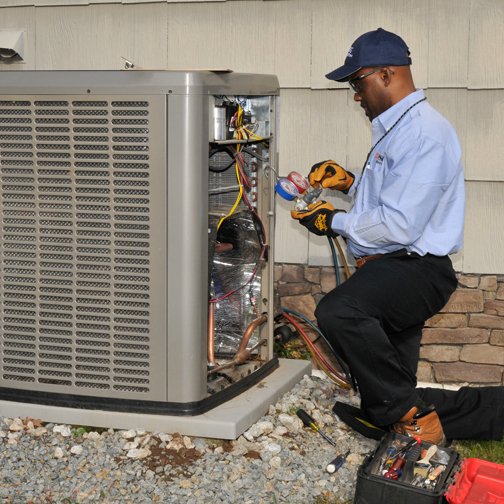
Technician checking an outdoor air conditioning condenser unit
HVAC technician performing air conditioning maintenance on an outdoor condenser unit
Quick Answers
Regular air conditioning maintenance helps improve cooling performance, reduce energy waste, and prevent unexpected breakdowns. Homeowners should inspect or clean air filters monthly, keep indoor and outdoor units clear of debris, and schedule professional maintenance before the cooling season. If the system has electrical issues, refrigerant problems, frozen coils, repeated water leaks, or unusual burning smells, call a licensed HVAC technician.
Air Conditioning Maintenance FAQs
How often should I maintain my air conditioner?
You should check or clean the air filter once a month during heavy use and schedule professional maintenance at least once a year, ideally before the cooling season. ENERGY STAR recommends annual pre-season checkups because contractors are often busiest once summer starts.
How often should I replace or clean the air filter?
For central air conditioners, furnaces, and heat pumps, inspect the filter once a month. Replace disposable filters or clean reusable filters when they look dirty. The U.S. Environmental Protection Agency notes that many manufacturers recommend filter replacement every 60 to 90 days, but dusty homes, pets, wildfire smoke, or heavy use may require more frequent changes.
Why is a dirty air filter a problem?
A dirty filter restricts airflow, which makes the air conditioner work harder. This can reduce comfort, increase energy use, strain the blower motor, contribute to frozen coils, and shorten equipment life. The U.S. Department of Energy notes that cleaning or replacing filters can reduce air conditioner energy consumption by about 5% to 15%.
What maintenance can homeowners do by themselves?
Homeowners can replace or clean filters, clear leaves and debris around the outdoor unit, keep supply and return vents open, check thermostat settings, and watch for water leaks or unusual noises. They should also make sure furniture, curtains, or rugs do not block airflow.
What should a professional AC maintenance visit include?
A typical professional maintenance visit may include checking thermostat settings, tightening electrical connections, inspecting voltage and current, checking the condensate drain, cleaning evaporator and condenser coils, checking refrigerant level, inspecting blower components, and confirming that the system starts, runs, and shuts off properly.
Do air conditioner coils need to be cleaned?
Yes. Dirty evaporator and condenser coils reduce the system’s ability to move heat. That can make the unit run longer, use more energy, and cool less effectively. Outdoor condenser coils should be kept clear of dust, grass clippings, leaves, and other debris.
Should I cover my outdoor AC unit?
In most climates, outdoor units are built to handle weather. A full cover can trap moisture and encourage corrosion or pests. If you use a cover in the off-season, choose a breathable cover recommended by the manufacturer and remove it before turning the system on.
How much space should I keep around the outdoor unit?
Keep the outdoor condenser clear of leaves, plants, grass, boxes, and other obstructions. Many HVAC contractors recommend at least 2 feet of clearance around the unit, but the exact clearance should follow the manufacturer’s installation instructions.
Air Conditioning Troubleshooting FAQs
Why is my air conditioner running but not cooling?
Common causes include a dirty air filter, blocked vents, incorrect thermostat settings, dirty coils, low refrigerant, weak airflow, or an undersized system. Start with simple checks: thermostat mode, filter condition, breaker status, and outdoor unit airflow. If the system still does not cool, call an HVAC technician.
Why is my AC blowing warm air?
Warm air can be caused by a thermostat set incorrectly, a dirty filter, a frozen evaporator coil, a failed compressor, low refrigerant, or an outdoor unit that is not running. If the outdoor condenser fan is off while the indoor blower runs, shut the system down and request service.
Why is my air conditioner leaking water indoors?
Indoor water leaks often come from a clogged condensate drain, dirty evaporator coil, cracked drain pan, disconnected drain line, or frozen coil that melts after shutdown. Turn off the system if water is dripping near electrical components, then call a technician.
Why does my AC freeze up?
An air conditioner can freeze when airflow is restricted or refrigerant levels are incorrect. Common causes include dirty filters, blocked return vents, dirty coils, blower problems, or refrigerant leaks. Turn the system off and let the ice melt before restarting. If freezing returns, schedule service.
Why is my air conditioner making loud noises?
Rattling may point to loose panels or debris. Buzzing may indicate electrical issues. Screeching can mean belt or motor problems. Grinding may suggest motor bearing failure. Banging or clanking can signal a loose or damaged part. Turn the unit off if the sound is sudden, loud, or unusual.
Why does my AC smell bad?
A musty smell may come from moisture, mold growth, a dirty drain pan, or biological buildup near the evaporator coil. A burning smell may indicate an electrical problem or overheated component. If you smell burning, shut the system off and call a professional immediately.
Why does my air conditioner keep turning on and off?
Frequent short cycling can be caused by a dirty filter, thermostat problems, low refrigerant, oversized equipment, poor airflow, or electrical faults. Short cycling wastes energy and stresses components, so it should be diagnosed quickly.
Why is one room hotter than the others?
Uneven cooling can come from closed vents, duct leaks, poor insulation, sunlight exposure, blocked returns, unbalanced ductwork, or an improperly sized system. Start by checking vents and filters. If the issue continues, ask an HVAC technician to inspect airflow and duct performance.
Why is my electric bill higher when using the AC?
Higher cooling costs can result from dirty filters, dirty coils, low refrigerant, poor insulation, air leaks, old equipment, extreme outdoor temperatures, or thermostat settings that are too low. Maintenance, sealing leaks, and using a programmable or smart thermostat can help reduce waste.
When should I call an HVAC technician?
Call a technician if the system will not cool after basic checks, the breaker keeps tripping, the unit freezes repeatedly, water leaks continue, refrigerant is suspected, electrical smells appear, or loud mechanical noises occur. Refrigerant, electrical, compressor, and sealed-system work should be handled by qualified professionals.
Air Conditioning Maintenance Checklist
Use this quick checklist during cooling season:
- Check or clean the air filter once a month.
- Keep the outdoor condenser clear of leaves, grass, and debris.
- Make sure supply and return vents are open and unobstructed.
- Check thermostat settings and replace weak batteries if needed.
- Look for water near the indoor unit.
- Listen for new rattling, buzzing, grinding, or screeching noises.
- Schedule professional maintenance before the hottest months.
- Keep a record of service dates, repairs, and filter changes.
Conclusion
Air conditioning maintenance and troubleshooting starts with simple habits: clean filters, clear airflow, clean coils, proper thermostat settings, and annual professional service. Many comfort problems begin with restricted airflow or neglected maintenance. For electrical faults, refrigerant problems, frozen coils, water leaks, or repeated shutdowns, a trained HVAC technician should inspect the system.
CTA: Need help diagnosing an air conditioning problem or planning preventive maintenance? Contact our HVAC support team with your AC model, photos, symptoms, and recent service history.
Sources